

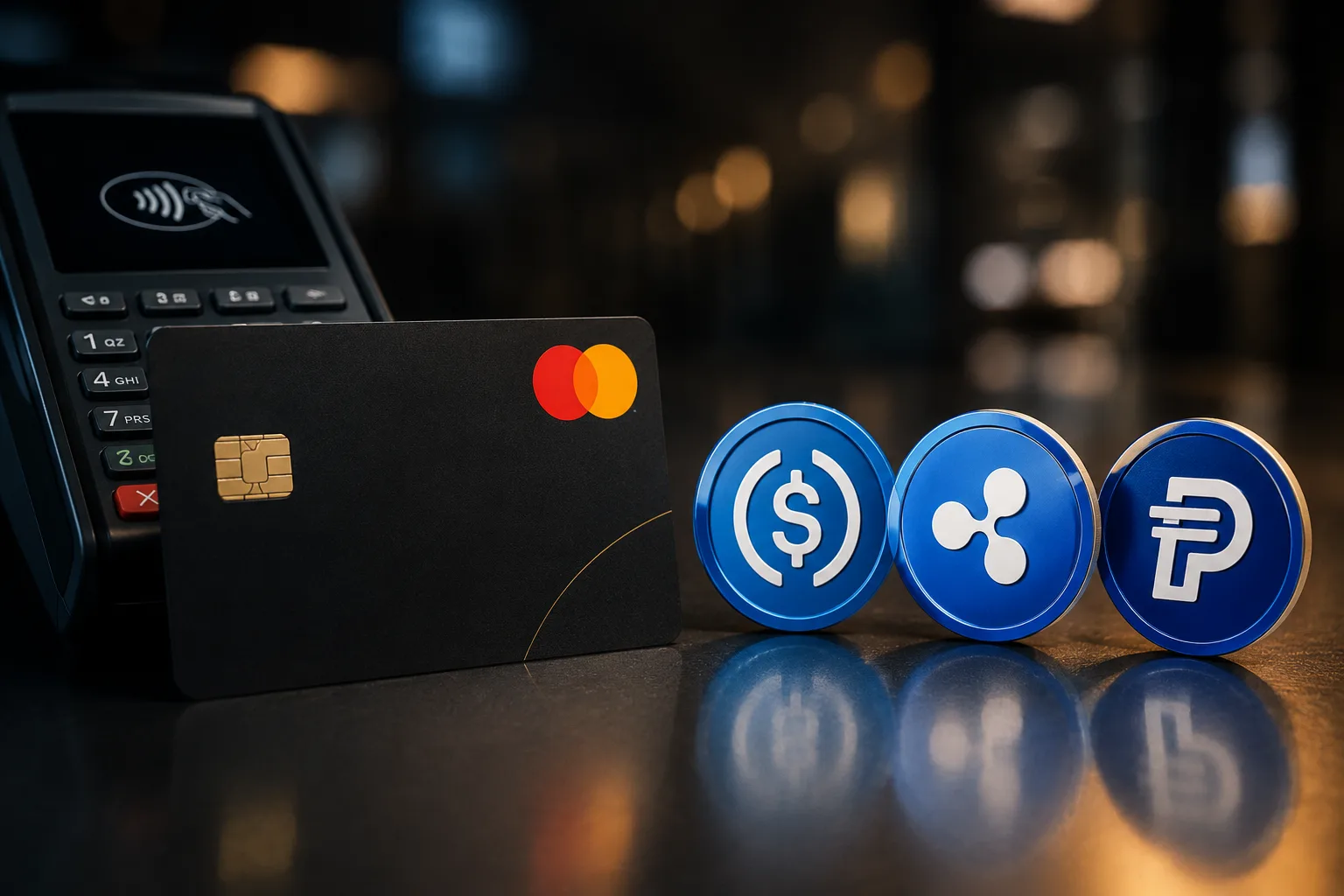
Mastercard has completed its acquisition of stablecoin infrastructure company BVNK, turning one of the world’s largest card networks from a partner in blockchain payments into the owner of a major stablecoin payments platform.
The transaction closed on August 3 after being announced in March for up to $1.8 billion, including $300 million in contingent consideration. BVNK operates across more than 130 countries and provides infrastructure allowing businesses and financial institutions to send, receive, store and convert stablecoins and fiat currencies.
BVNK has been reported to process approximately $30 billion in annualized transaction volume. That figure represents payment volume running through its infrastructure, rather than assets owned by Mastercard.
The acquisition gives Mastercard an internally controlled bridge between conventional payment systems and blockchain-based money at a time when stablecoins are increasingly moving beyond crypto trading into cross-border payments, treasury management, remittances and settlement.
Mastercard Takes the Infrastructure In-House
Mastercard initially said the BVNK transaction was expected to close before year-end, subject to regulatory approval and customary conditions. Completion approximately four and a half months after the announcement therefore puts the integration ahead of that original timetable.
The strategic significance is less about Mastercard issuing its own cryptocurrency than controlling the infrastructure needed to move between different forms of money.
BVNK connects businesses with major blockchain networks while handling conversion between fiat and stablecoins. Mastercard, meanwhile, operates in more than 200 countries and territories, with card acceptance spanning hundreds of millions of locations and digital access points.
Combining those systems could allow banks, fintechs and enterprises to use stablecoins without independently assembling blockchain connectivity, liquidity providers, wallets and banking relationships.
Mastercard has already been building toward that model through stablecoin settlement initiatives, Mastercard Move and partnerships involving crypto companies and regulated issuers.
Open USD Becomes an Early Test
One of the most closely watched applications for the combined infrastructure will be Open USD, the dollar-backed stablecoin announced by Open Standard on June 30.
More than 140 businesses are participating in the initiative, including Mastercard, Visa, American Express, Coinbase, Stripe, BlackRock, BNY, Google and Shopify. Open USD is expected to launch later in 2026.
Its model differs notably from established stablecoins such as Tether’s USDT and Circle’s USDC. Participating businesses are expected to be able to mint and redeem Open USD without fees or artificial volume limits, while reserve earnings will be distributed to partners after a management fee rather than accruing primarily to a centralized issuer.
That creates an obvious infrastructure challenge: a shared stablecoin backed by banks, payment companies and technology firms needs reliable connectivity between blockchain and traditional financial systems.
BVNK gives Mastercard a direct technological position in solving that problem.
Open USD is therefore an important early test of Mastercard’s larger stablecoin strategy. The $1.8 billion acquisition does not guarantee that blockchain settlement will displace existing payment rails. Instead, it signals that Mastercard expects multiple forms of money — fiat currencies, stablecoins and tokenized deposits — to coexist, and sees controlling the infrastructure connecting them as strategically valuable.